Ways social workers impact modern education
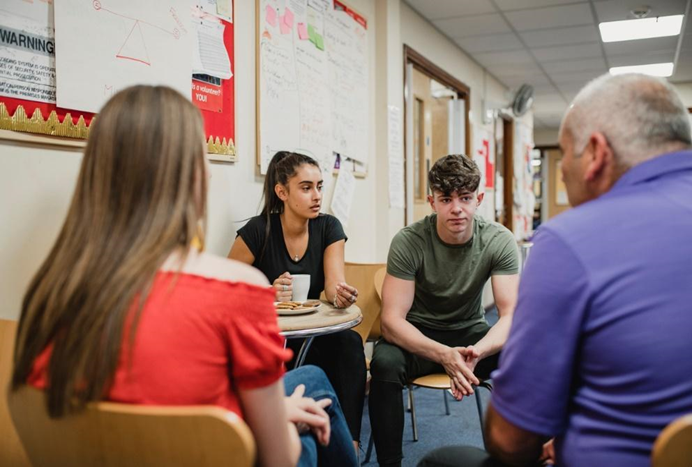
Social workers do a lot to help communities, but their impact can often go unnoticed. For one thing, a community may not be aware of the many environments where social workers are active. One area where they are particularly valuable is in the education system. This is also a specialization that social workers can pursue to acquire the skills to impact students and their families optimally.
Primary role of social workers in modern education
The primary reason for positioning social workers in school environments is to look out for the disadvantaged and find ways to assist them. There may also be students with heightened needs, whether of a mental health or academic nature, that require more assistance than other students.
In addition, it’s important to remember that children attending school do not face their school activities in a vacuum. Academic performance and the capacity to acquire knowledge are affected by factors at home. Schools may task social workers with looking for ways to improve caretakers’ well-being so students’ basic needs are met and they feel safer at home. By improving factors like these, students’ ability to achieve academic goals increases.
One benefit of having social workers active inside schools is that they can meet students where they spend a great amount of their time. Continual interaction can breed more trust, increasing the chances of students responding positively to social workers’ attempts to assist.
Ways social workers have an impact in an educational setting
Truthfully, almost all schools have a need for these professionals. Social workers can do research based on salaries and need assessments to determine the best state for social workers to look for work. However, any educational facility is a worthwhile territory to utilize your skill set. Aspiring social workers can enroll in programs such as the Masters in Social Work at a reputable institution such as Keuka College. This program offers 100% online coursework combined with experiential learning. Students study a wide range of topics, including social work ethics and applications in diversity, social work practice with couples and families, human behavior, and the social environment.
Connecting people and resources
Education doesn’t happen in a vacuum, and children whose basic needs aren’t fulfilled find it difficult to achieve success in academics, sports, and other school-related activities. After all, something as simple as being hungry means a child can’t concentrate in class. It can even lead to problems like stealing from others out of desperation.
Social workers are trained to identify problems and can hopefully improve the situation at the source. This may involve a family facing financial troubles and not having food or parents neglecting their children. In some scenarios, there are community resources available that families aren’t aware of. Social workers can connect them with solutions, improving the family’s quality of life and enabling the child to experience school from a different perspective — hopefully leading to better performance.
Support leading to better academic performance
Teachers may notice certain students falling behind, but workloads mean they don’t have the scope to find solutions. The primary role of a social worker is to get people access to the resources they need. For students, this could mean arranging assistance to deal with learning disabilities.
Firstly, finding someone who understands and offers support can put a student in a better state of mind all by itself. At the same time, access to resources like testing, tutoring or medication can further improve academic performance. The necessary steps may even be as simple as providing the student with a different seating position in class or arranging more time for tests. Social workers can be mediators between students, teachers and parents to implement the necessary arrangements appropriate for the learning challenge.
Managing mental health for overall well-being
Students may also find it difficult to keep up academically when they face mental health challenges. Social workers know the symptoms to look out for and can counsel students, helping them navigate anxiety, depression or other problems. With social workers stationed in schools, all students can have easy access to this necessary resource.
It is important to note that social workers do need the relevant training to provide therapy. If they realize a situation is beyond their scope of reference, they can refer a student to another professional.
While this can improve a student’s ability to achieve more during their school years, it can also have a positive long-term effect, such as improving career outcomes.
Better outcomes of crisis situations
Unfortunately, social workers can’t fix all students’ challenges or protect them from all obstacles. They may face trauma at home or have ongoing problems with family members. In these situations, a social worker’s valuable task is performing crisis intervention as needed and teaching students the skills to cope better with such situations. This can include:
- Teaching skills such as anger management
- Facilitating discussions between family members
- Educating children and families about available resources related to the crises they face
These can make situations more manageable.
Empowering educators
It’s not only social workers that want to see students do well. Most educators have a passion for the younger generation but may not have the skills to help those who face specific challenges. Whether through mediation or offering training, social workers can empower educators with the knowledge to help students in need of special attention.
With more school staff members with the skills to help their students, there’s a higher chance of those young people achieving success during both their school years and later in life.
Social workers are indirectly affecting education
It’s worth noting that even social workers who are active outside the realms of educational facilities can impact young people’s education. When a social worker can help improve a parent’s mental health at a rehabilitation center or succeed in getting a family access to resources that improve their quality of life, it automatically impacts the children’s lives. In many cases, this will lead to better outcomes at school.
Social workers working in various other sectors can feel encouraged that their work also makes a difference in young people’s lives.
Final thoughts
The far-reaching impact of social workers on the education sector is clear. Students can experience the benefit of support not only in their immediate circumstances but also in their futures.
Social workers who are passionate about helping the younger generation are advised to align their competencies with what is needed in school environments. This can support a legacy that includes many lives being impacted in a positive way and enjoying better futures.