StudyFundo: Making University Affordability a Starting Point, Not an Afterthought
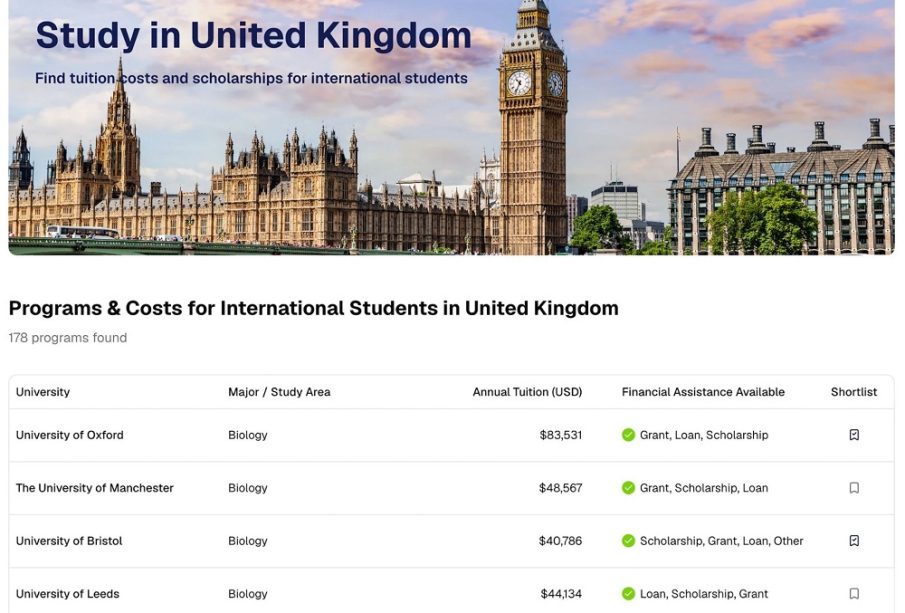
For many families, choosing a university is inseparable from one question: can we afford it?
Yet affordability is often considered surprisingly late in the university search. Students identify institutions and programmes first, then begin working out tuition fees, scholarships and financial support afterwards. By then, families may have invested considerable time in options that are unrealistic—or ruled out universities that might have become affordable once funding was taken into account.
For high school counsellors, the problem is familiar. Finding a published tuition fee is usually straightforward. Understanding what a particular student may actually pay is not.
Scholarships may sit on a separate university page. Government grants or loans may be listed on national or regional websites. Foundations and other organisations can offer funding that the university itself does not prominently advertise. For families considering several countries, the search quickly becomes fragmented.
StudyFundo was developed after counsellors and parents repeatedly raised this frustration: there was no simple starting point that brought university costs and the funding available to reduce them into the same research process.
The platform is intended primarily for high school counsellors, whether school-based or independent, with parents as the second major audience.
The headline price is only part of the story
Published tuition can be a poor guide to what university will ultimately cost a family.
A programme that appears expensive may become realistic once scholarships, grants or government support are considered. Another may remain unaffordable despite financial assistance. Understanding the difference normally means searching several sources for each university.
International study adds another complication: citizenship and residency can change both the price and the available help.
Students applying to the same programme may face different tuition categories depending on nationality or residence. Eligibility for scholarships, grants, loans and government programmes can also vary.
StudyFundo therefore incorporates citizenship into the search process, alongside field of study and destination, so the starting information is more relevant to the individual student rather than based on a single generic international fee.
A more useful counselling meeting
The practical value is clearest when a counsellor is sitting with a student and parents.
Instead of identifying several universities and then spending hours researching costs afterwards, the counsellor can begin exploring tuition and available financial assistance during the meeting itself.
Promising programmes can be added to a shortlist and shared with the family immediately or sent straight afterwards.
The shortlist is more than a summary of the meeting. It becomes a working list of target universities that students, parents and counsellors can continue to review and refine.
It keeps programme choices, tuition, deadlines and categories of financial assistance together in one place, making it easier to track which schools remain serious options as the search develops.
For counsellors managing large caseloads, that can reduce a substantial amount of repetitive research and follow-up. More of the meeting can then be spent on questions that require professional judgement: academic fit, admissions prospects, family priorities and the trade-offs between different choices.
Where AI helps
Recent advances in artificial intelligence and data-processing tools have made this kind of service more practical.
The challenge has never been a lack of information. It is that the information is scattered across thousands of university, government and third-party sources and changes over time.
StudyFundo uses AI-assisted tools alongside a structured database built specifically around university costs and financial assistance. Information is checked against source material and reviewed as fees and funding programmes change.
The technology is intended to reduce the time spent finding and organising information, not to replace counsellors or final verification.
Tuition figures and individual eligibility should still be confirmed with the relevant university or funding provider. The counsellor remains responsible for interpreting the information in the context of the student.
That distinction is important. The most useful role for AI in education counselling may not be making decisions for families, but removing enough of the repetitive research that counsellors have more time to help families make those decisions well.
For StudyFundo, the underlying proposition is simple: affordability should be part of the university search from the beginning, not a problem discovered at the end.